
 Image 1 of 3
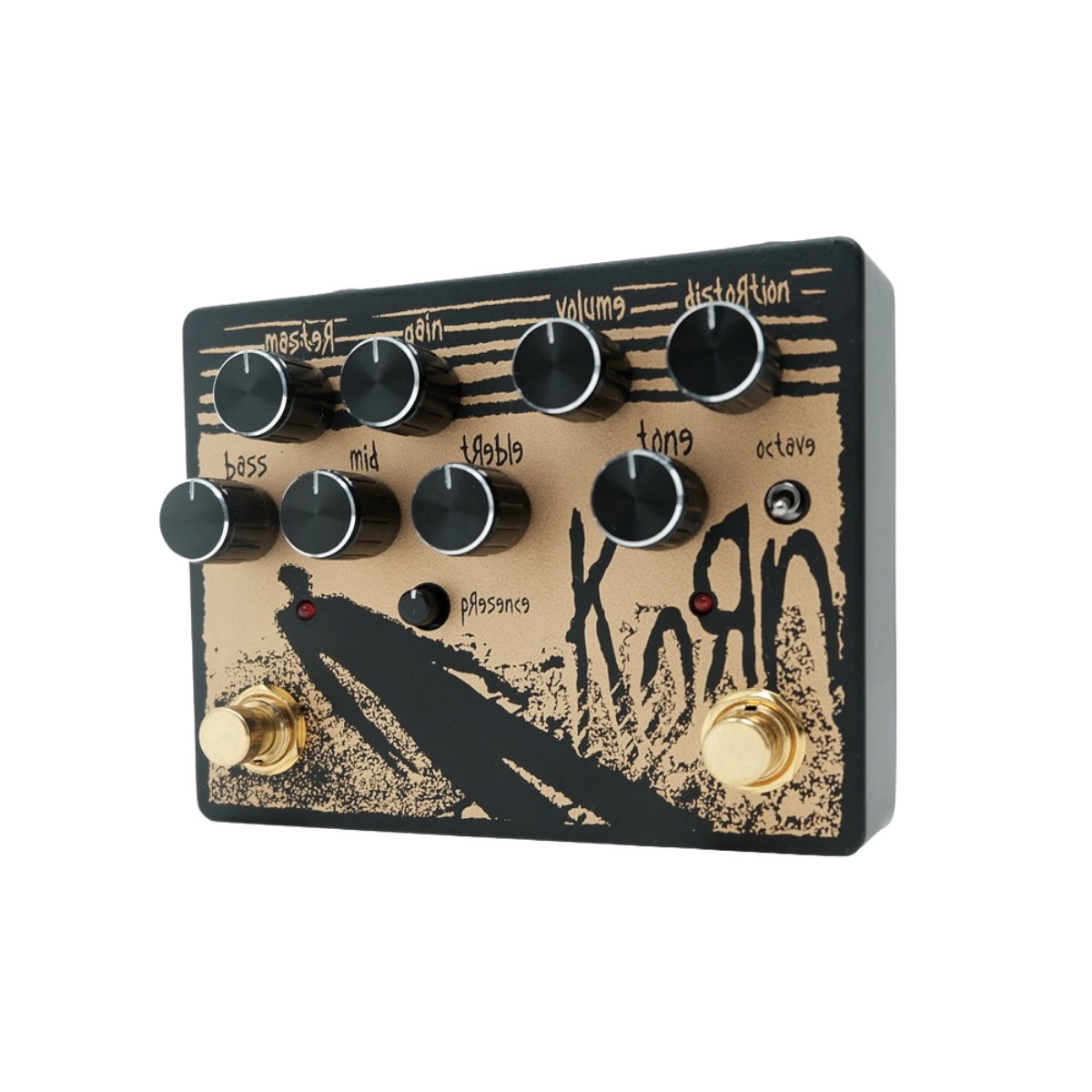 Image 2 of 3
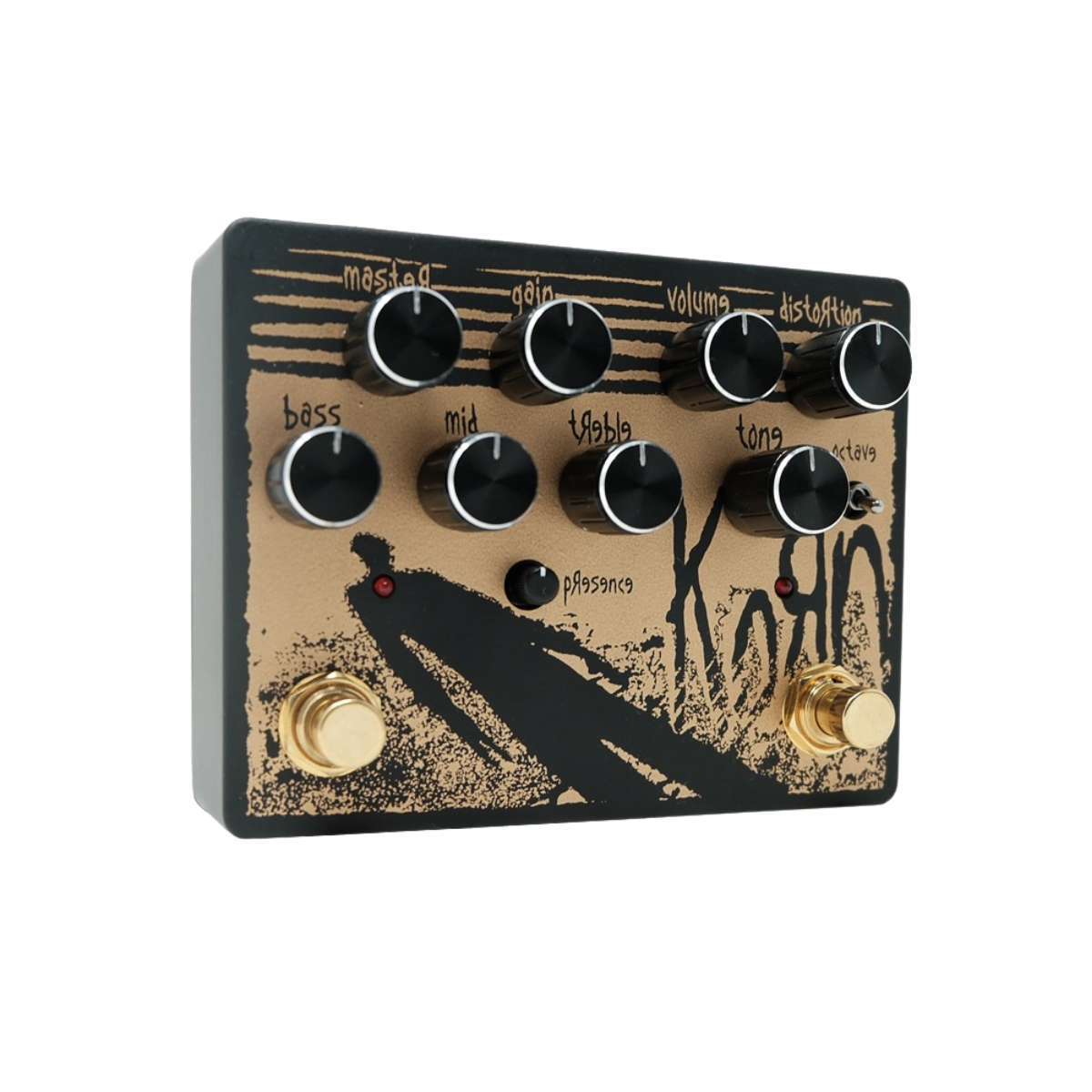 Image 3 of 3
creator: KHDK Electronics
model: KoRn Indigo Sludge “Head”
type: preamp/fuzz/distortion
signal processing: analog
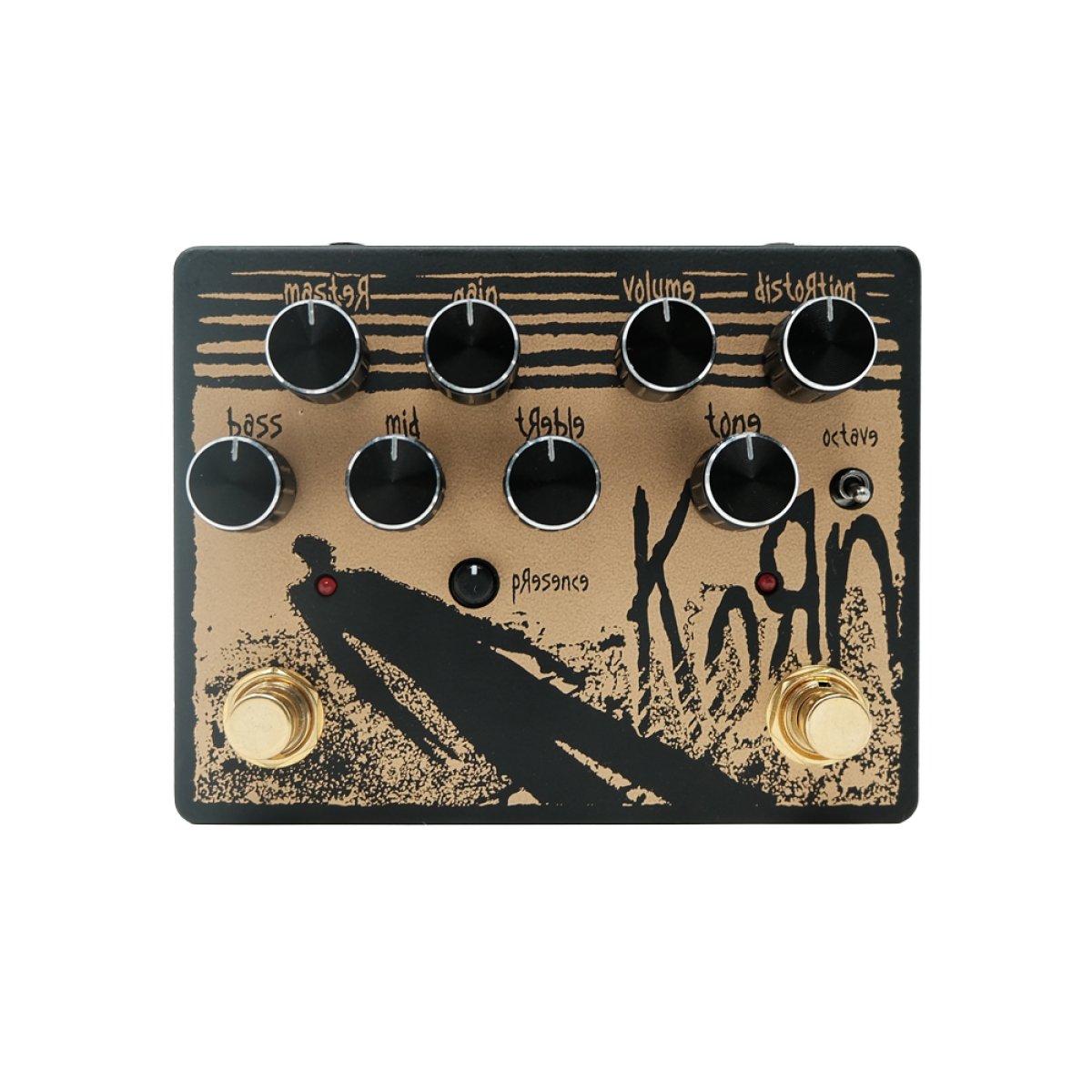
potentiometers: master, gain, volume, distortion, bass, mid, treble, tone, presence
switches: octave, output level (internal)
buttons: preamp true bypass, fuzz/distortion true bypass
input: 1/4” TS
output: 1/4” TS
power input: 9V
current draw: 80 mA
finish: silk screened
potentiometer knobs: black with silver accents
dimensions: 117mm x 93mm x 56mm
birthplace: Prague, CZ
birthday: May 29th, 2026
includes:
- Certificate of Authenticity, signed by "Head" Brian Welch
- KHDK Electronics Custom Shop packaging
- KoRn Indigo Sludge manual
“Only 500 will ever be made. Each one a faithful recreation of the rare modified tube amp and heavily-modded fuzz that powered Korn's '94–'96 Indigo Ranch sessions with Ross Robinson.
Two independent sections in one box, with a phase-aligned sub-octave built for massive walls of sound.
"This pedal isn't 'inspired by' — it's built on the same ingredients that forged the sound. Plug in and feel that electricity."
~ Brian "Head" Welch
Every unit ships with a Certificate of Authenticity personally signed by Head.
This isn’t just another pedal—it’s the exact preamp that powered Blind and Shoots and Ladders, the two records from the Indigo Ranch era produced by Ross Robinson.
Plug in, hit that first riff, and feel the same electricity that started a revolution.
The Indigo Sludge Preamp + Fuzz isn’t just another distortion box — it’s a faithful recreation of the exact tonal DNA that shaped Korn’s first two records.
Two independent sections with separate bypass stomp switches. Run the preamp alone into a different power amp or booster, run the fuzz on its own, or stack them.
Captures the tone, character, and dynamics of the rare, modified tube amp from the original Indigo Ranch rigs — tight, saturated crunch with full dynamic response.
Bass — Low-frequency response. Clockwise for punch and fullness, counterclockwise to tighten.
Mid — Clockwise for presence and cut, counterclockwise to scoop for hollow rhythm tones.
Treble — Clockwise for brightness and bite, counterclockwise for warmth.
Gain — Preamp saturation, from clean and dynamic to aggressive high-gain.
Master — Overall preamp output level.
Presence — Top-end clarity to cut through the mix.
EQ controls interact naturally with each other, the way a real amp behaves.
A faithful recreation of the heavily-modded fuzz pedals used during the '94–'96 sessions. Gritty, relentless fuzz built for walls of sound and spaced-out breakdowns.
Distortion — Saturation, from subtle grit to thick, aggressive fuzz.
Tone — Brightness and bite of the distorted signal.
Volume — Output level of the distortion stage.
Custom phase-aligned sub-octave circuit, fully integrated into the distortion section. Three positions, no extra controls needed:
Down — Off. Dry signal only.
Middle — 25% blend. Subtle sub-octave thickness, clarity preserved.
Up — 50% blend. Massive low end filling the full low/mid spectrum.
A slide switch inside the enclosure (upper-right corner, accessible by removing the bottom plate) sets the preamp's output level for your rig.
LOW — For a standard guitar amp's clean channel. Keeps output safe for typical amp inputs.
HIGH — Hotter, line-level signal for power amp inputs, effects returns, or running direct to a mixing console.
Set it once and leave it. Not designed for frequent adjustment.
For the most accurate, full-range sound, run the pedal directly into a power amp or console. A clean amp channel works, but the tightest low end and full dynamic range come through when you skip the preamp stage of a regular amp. If you do go through a clean channel, lower the input gain and switch off any bright or treble-enhancing features.
Input — 1/4" instrument input from your guitar
Output — 1/4" to amp or pedalboard
Power — 9V DC, center-negative, regulated, minimum 80 mA
Bypass — True bypass on both sections”
stock photos provided by KHDK Electronics.
creator: KHDK Electronics
model: KoRn Indigo Sludge “Head”
type: preamp/fuzz/distortion
signal processing: analog
potentiometers: master, gain, volume, distortion, bass, mid, treble, tone, presence
switches: octave, output level (internal)
buttons: preamp true bypass, fuzz/distortion true bypass
input: 1/4” TS
output: 1/4” TS
power input: 9V
current draw: 80 mA
finish: silk screened
potentiometer knobs: black with silver accents
dimensions: 117mm x 93mm x 56mm
birthplace: Prague, CZ
birthday: May 29th, 2026
includes:
- Certificate of Authenticity, signed by "Head" Brian Welch
- KHDK Electronics Custom Shop packaging
- KoRn Indigo Sludge manual
“Only 500 will ever be made. Each one a faithful recreation of the rare modified tube amp and heavily-modded fuzz that powered Korn's '94–'96 Indigo Ranch sessions with Ross Robinson.
Two independent sections in one box, with a phase-aligned sub-octave built for massive walls of sound.
"This pedal isn't 'inspired by' — it's built on the same ingredients that forged the sound. Plug in and feel that electricity."
~ Brian "Head" Welch
Every unit ships with a Certificate of Authenticity personally signed by Head.
This isn’t just another pedal—it’s the exact preamp that powered Blind and Shoots and Ladders, the two records from the Indigo Ranch era produced by Ross Robinson.
Plug in, hit that first riff, and feel the same electricity that started a revolution.
The Indigo Sludge Preamp + Fuzz isn’t just another distortion box — it’s a faithful recreation of the exact tonal DNA that shaped Korn’s first two records.
Two independent sections with separate bypass stomp switches. Run the preamp alone into a different power amp or booster, run the fuzz on its own, or stack them.
Captures the tone, character, and dynamics of the rare, modified tube amp from the original Indigo Ranch rigs — tight, saturated crunch with full dynamic response.
Bass — Low-frequency response. Clockwise for punch and fullness, counterclockwise to tighten.
Mid — Clockwise for presence and cut, counterclockwise to scoop for hollow rhythm tones.
Treble — Clockwise for brightness and bite, counterclockwise for warmth.
Gain — Preamp saturation, from clean and dynamic to aggressive high-gain.
Master — Overall preamp output level.
Presence — Top-end clarity to cut through the mix.
EQ controls interact naturally with each other, the way a real amp behaves.
A faithful recreation of the heavily-modded fuzz pedals used during the '94–'96 sessions. Gritty, relentless fuzz built for walls of sound and spaced-out breakdowns.
Distortion — Saturation, from subtle grit to thick, aggressive fuzz.
Tone — Brightness and bite of the distorted signal.
Volume — Output level of the distortion stage.
Custom phase-aligned sub-octave circuit, fully integrated into the distortion section. Three positions, no extra controls needed:
Down — Off. Dry signal only.
Middle — 25% blend. Subtle sub-octave thickness, clarity preserved.
Up — 50% blend. Massive low end filling the full low/mid spectrum.
A slide switch inside the enclosure (upper-right corner, accessible by removing the bottom plate) sets the preamp's output level for your rig.
LOW — For a standard guitar amp's clean channel. Keeps output safe for typical amp inputs.
HIGH — Hotter, line-level signal for power amp inputs, effects returns, or running direct to a mixing console.
Set it once and leave it. Not designed for frequent adjustment.
For the most accurate, full-range sound, run the pedal directly into a power amp or console. A clean amp channel works, but the tightest low end and full dynamic range come through when you skip the preamp stage of a regular amp. If you do go through a clean channel, lower the input gain and switch off any bright or treble-enhancing features.
Input — 1/4" instrument input from your guitar
Output — 1/4" to amp or pedalboard
Power — 9V DC, center-negative, regulated, minimum 80 mA
Bypass — True bypass on both sections”
stock photos provided by KHDK Electronics.